Our Location
304 North Cardinal St.
Dorchester Center, MA 02124

Great attention is paid to the Layout of Ancestral Halls, a core part of Ancient Chinese architecture and Chinese traditional architecture, carrying clan culture and traditional architectural craftsmanship. An ancestral hall, also called a clan shrine or ancestral temple, is a sacred place for enshrining ancestral tablets and holding worship ceremonies, as well as a key carrier for inheriting clan traditions, enforcing rules, holding meetings and hosting wedding/funeral banquets, maintaining clan cohesion.
In modern China, ancestral hall culture thrives in Jiangxi and Guangdong, where many ancestral halls retain complete architectural forms and layout norms. Jiangxi’s ancestral hall layout has wide influence: during the Ming and Qing dynasties, Jiangxi ancestors migrated to central and southern provinces, bringing their ancestral hall craftsmanship and norms, which shaped local traditional buildings and rural self-built houses.
Historic wars from Mongol Yuan and Manchu Qing invasions prevented northern Han ancestors from forming stable villages, leaving few surviving ancestral halls. Most northern villages have mixed surnames and scattered clans, making traditional hall construction difficult. Ancestral hall layout requires strict norms, scale and site selection (on the village’s best geomantic dragon vein), consistent with Chinese temple site selection.
The following will elaborate on ancestral hall layouts in Jiangxi and Guangdong, with reference to relevant norms of ancient Chinese architecture.
This layout is widely used in central and southern China, such as Hubei, Hunan, Jiangxi, Anhui and Sichuan. It is a typical representative of local Chinese traditional architecture, whose layout concepts and craftsmanship provide important references for local traditional building renovation and rural self-built house design.
Built with grey bricks, grey tiles and white walls, these buildings have a simple and elegant style. Gable walls are mostly hard gable fire walls (preventing fire and adding solemnity), consistent with the style of Chinese traditional architecture. As shown in the figure below:
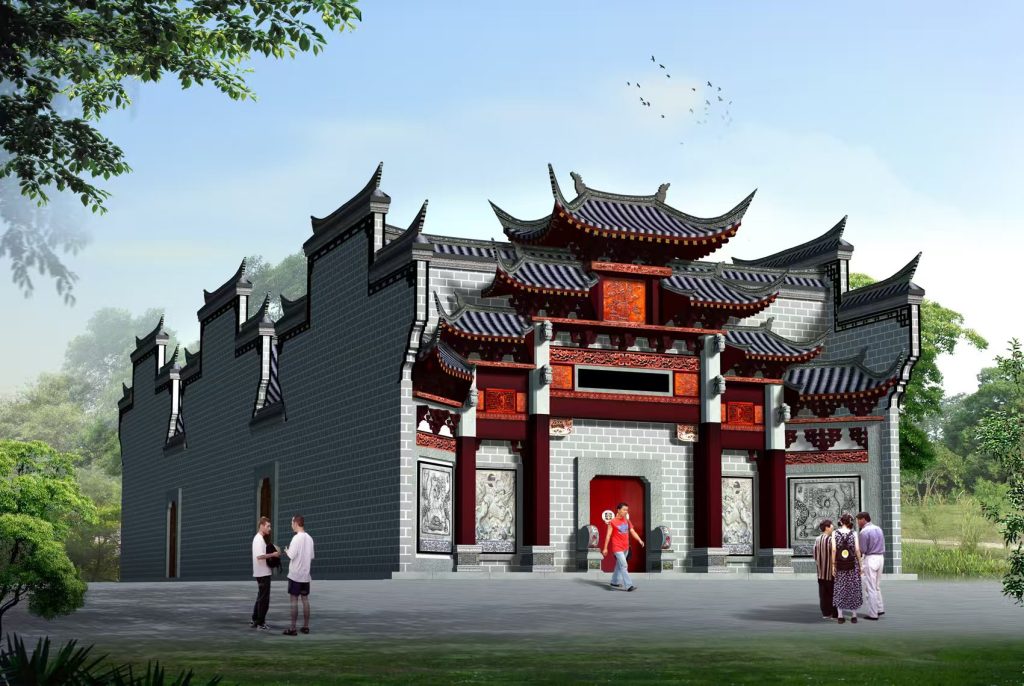
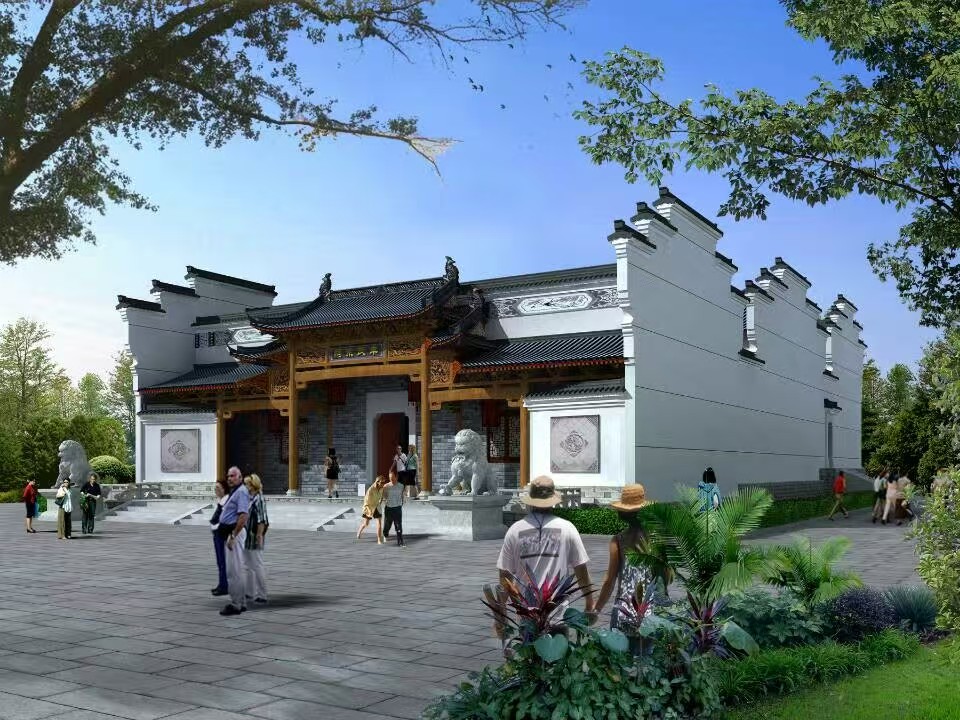
The classic “four rivers converging into the hall” layout with a patio collects rainwater (implying “benefits stay in the clan”) and ensures ventilation, lighting and drainage. Decoration focuses on wood, stone and brick carving (themes of characters, flowers, landscapes), a core feature of ancient Chinese architecture.
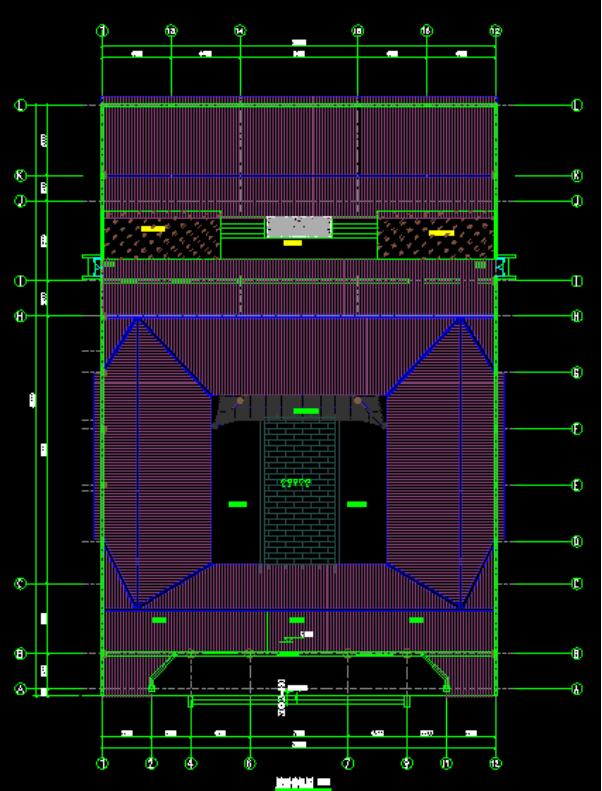
Jiangxi (Anhui)-style ancestral halls are divided by the through hall side door: the front lively area hosts clan banquets (30-50 tables for 1,000-people villages) and festival opera performances. The rear solemn area holds ancestral niches, offering tables and ritual vessels, with a rigorous layout similar to Chinese temple auxiliary spaces, showing respect for ancestors.
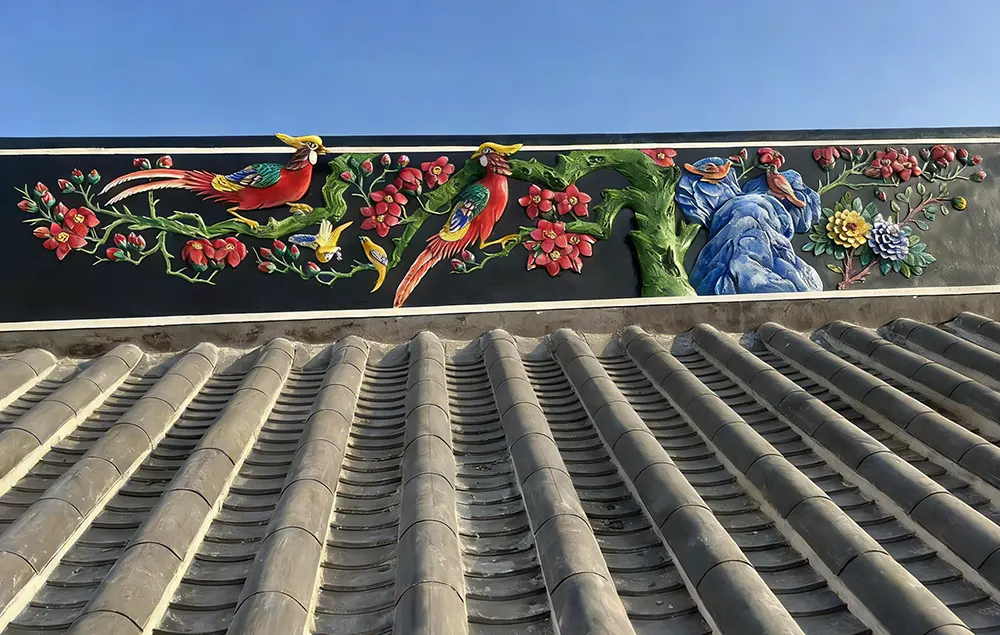
Most Guangdong-style ancestral halls have a hip-and-gable roof and grey brick walls on stone plinths (ensuring stability and solemnity). Gable walls are mostly wok-ear or fire-sealing walls (wok-ear walls are a signature of Guangdong architecture). Wide ancestral halls have Qingyun Alleys (ventilation, fire prevention, implying “prosperity”) with inverted wing-rooms for guests or storage. Roof ridge grey plaster (grey carving) is exquisite (themes of figures, flowers, auspicious beasts), a distinctive element of Chinese traditional architecture. As shown in the figure below.
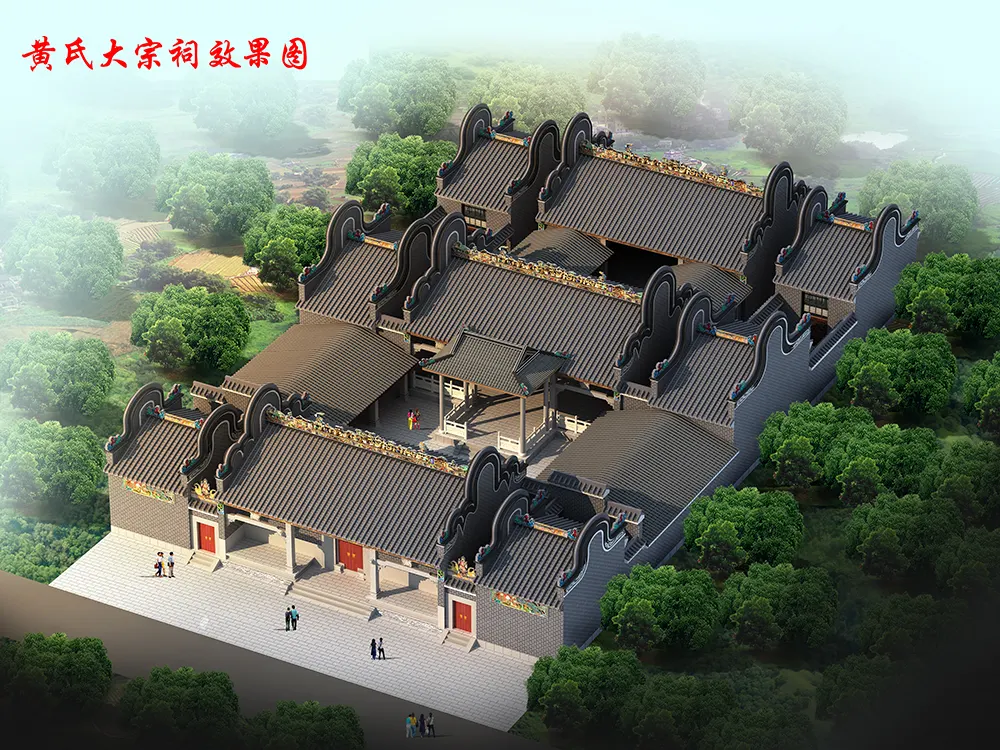
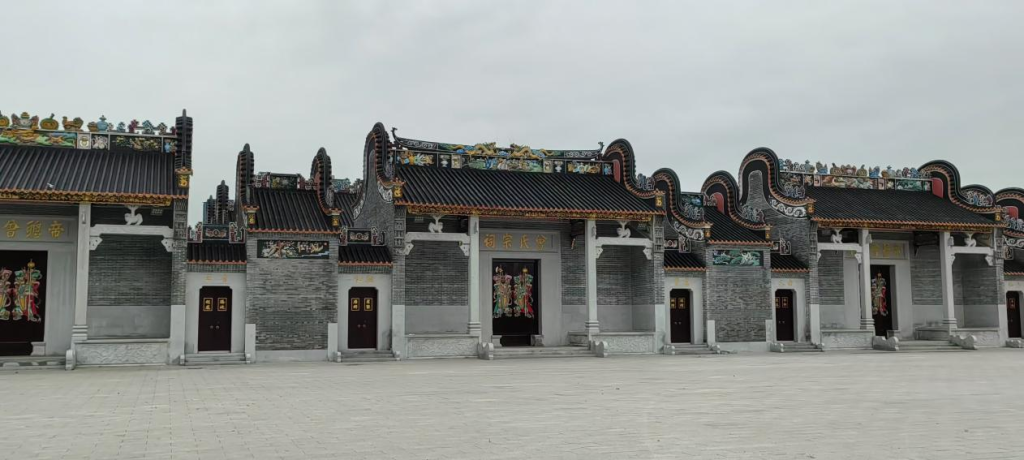
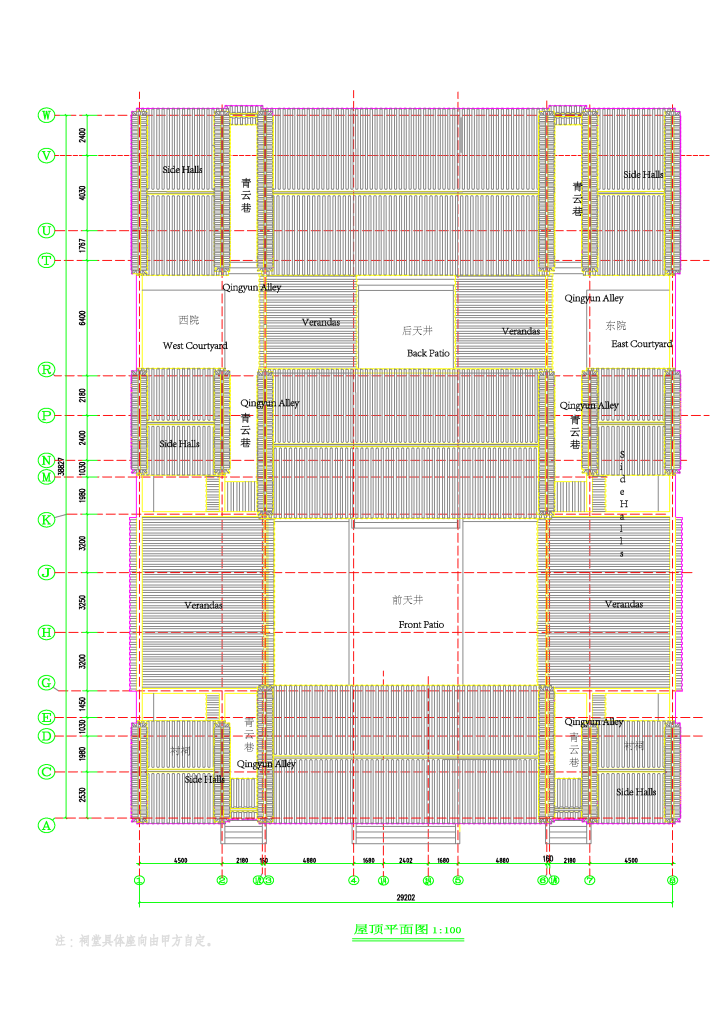
Guangdong-style ancestral hall layouts generally adopt the classic “three bays and three courtyards” pattern, with symmetrical and regular structures showing the symmetrical aesthetics of ancient Chinese architecture: core buildings such as the main gate, patio, central hall and rear sleeping quarters are arranged along the central axis, with verandas, Qingyun Alleys and side ancestral halls symmetrically on both sides, with clear functional zones. Smaller ancestral halls, study halls and private schools mostly adopt the traditional concave entrance form of Cantonese dwellings, which enhances layering and shelters from wind and rain, and is also widely used in local rural self-built house design.
Despite regional differences, ancestral hall layout, as a core part of ancient Chinese architecture, shares common elements: gate square, opera stage, main gate, walls, patio, worship halls and auxiliary rooms. These elements reflect the aesthetic characteristics of Chinese traditional architecture and provide references for modern ancestral hall design and construction, traditional building renovation and enthusiasts.
